
Tanzania is a renowned safari destination in East Africa and is home to some of the world’s greatest wildlife spectacles, making it a top safari destination in Africa. It offers fantastic safari experiences and a once-in-a-lifetime opportunity to witness millions of animals moving across the landscape during the annual wildebeest migration between Tanzania’s Serengeti National Park and Kenya’s Maasai Mara National Reserve.

But Tanzania is much more than the Great Migration. The Swahili word safari means “journey,” and travelling to Tanzania allows you to experience some of Africa’s most remarkable landscapes and wildlife. From the highest peak in Africa, Mount Kilimanjaro, to pristine national parks home to the “Big Five”—elephant, lion, leopard, rhinoceros, and buffalo—Tanzania offers an extraordinary variety of safari destinations and experiences.
Mount Kilimanjaro
Mount Kilimanjaro is a gem of Tanzania safaris and attracts many safari travellers who wish to climb the highest mountain in Africa. The mountain draws more than 16,000 climbers annually because of its popularity, and if altitude sickness is managed properly, you can have a relatively straightforward ascent.
Take the Northern Circuit route to avoid some of the busiest paths and enjoy a more peaceful climb.
Mount Meru
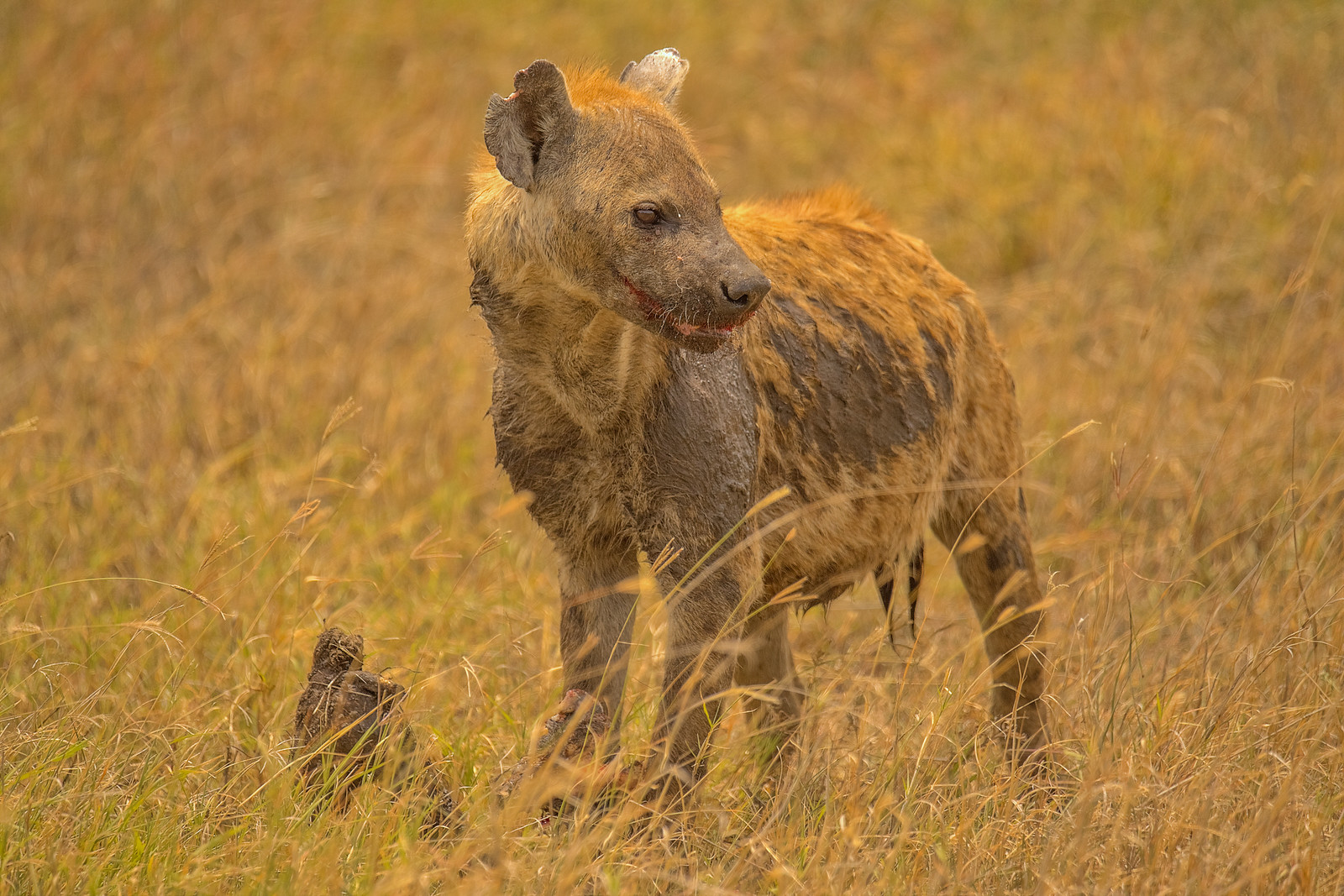
Located around 40 kilometres west of Mount Kilimanjaro, Mount Meru is a striking, triangular-shaped mountain that is often surrounded by clouds. Situated in Arusha National Park, the mountain serves as a tranquil sanctuary for an array of wildlife, including giraffes, leopards, and hyenas that move through the area during the early hours of the day.
Climbing this dormant volcano, which rises to 15,000 feet, often takes three to four days. Climbing Mount Meru is also a popular prelude for those who intend to ascend Mount Kilimanjaro because it provides an opportunity to acclimatise to the altitude in advance.
Treks start at Momella Gate in the park. Hiking guides frequently regale their clients with stories from their professional experiences of seeing wild animals in the park during overnight stays in mountain huts along the way.
Serengeti National Park

Serengeti is known as Siringet, which translates to “endless plains” in the Maa language, according to the Maasai people who are associated with the park and have lived in the area for thousands of years.
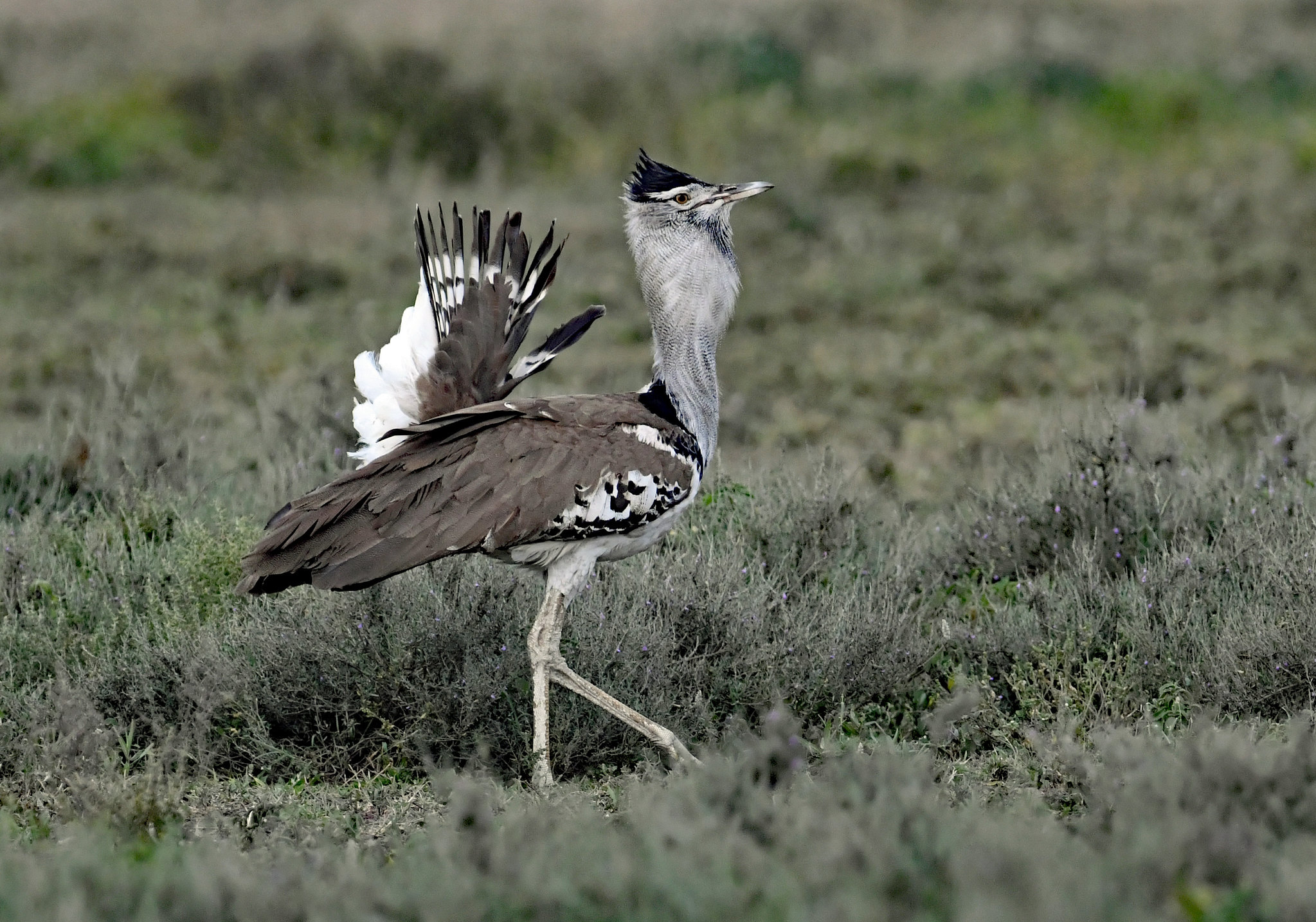
Indeed, anyone travelling to Serengeti National Park will witness vast, lush, acacia-tree-studded plains stretching for miles in all directions. These plains form part of a complex ecosystem that supports some of Africa’s greatest diversity of plant and animal life, including 35 different kinds of mammals and 450 different species of birds, making it a great birding safari destination in Tanzania.
Every year, from May to September, more than two million wildebeest, antelope, and zebra travel from the park’s southern Ndutu region towards Kenya’s Maasai Mara National Reserve. This is the planet’s largest terrestrial migration.
Tarangire National Park
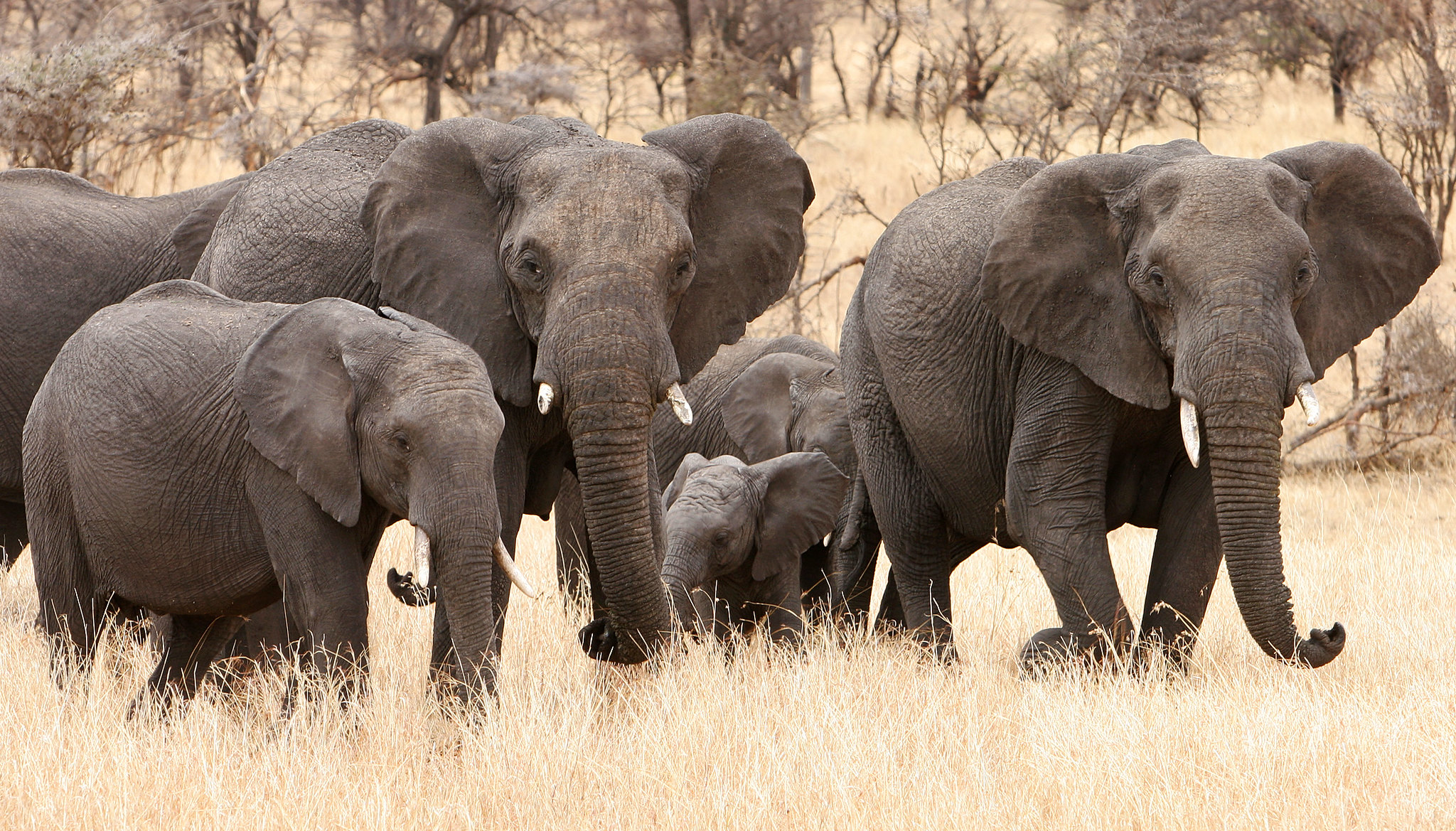
Tarangire National Park is about a three-hour drive from Arusha town. A sizable population of elephants is among the top safari attractions in Tarangire. In the southern part of the conservation area, elephants travel inland towards Lake Manyara, which, like Tarangire, lies under the rain shadow of Mount Ngorongoro.
This movement illustrates an intriguing aspect of Tanzania’s natural character: the country contains natural corridors that allow elephants and other animals to travel freely between parks.
The park’s enormous baobab trees, which may be hundreds or even thousands of years old, are another noteworthy feature. The branches of these recognisable and magnificent trees are greatly utilised by baboons, leopards, and other animals that reside in the park.
Nyerere National Park
This national park was previously known as Selous Game Reserve and can be reached by driving for about five hours from Dar es Salaam to Nyerere National Park. Up until the final uneven section, the road is generally smooth, although a 4WD vehicle is required.
Almost 31,000 square kilometres (11,970 square miles) are home to vast herds of wildlife, including the Big Five and other antelope that are uncommon in other parks across the continent. Keep an eye out for sable, Lichtenstein’s hartebeest, brindled gnu, and roan antelope.
The endangered African wild dogs, whose frantic pace during hunting makes for an exciting game drive, are also found in one of the largest concentrations in the world in Nyerere. An avid observer can also spend hours looking for birds in the forest and surrounding areas.
The park is a photographer’s paradise, with its lush landscapes and the gorgeous Rufiji River flowing into oxbow lakes. Keep in mind that the majority of guests opt to take a one-hour charter flight to one of the park’s several airstrips—an additional opportunity to capture unique pictures.
Lake Manyara National Park
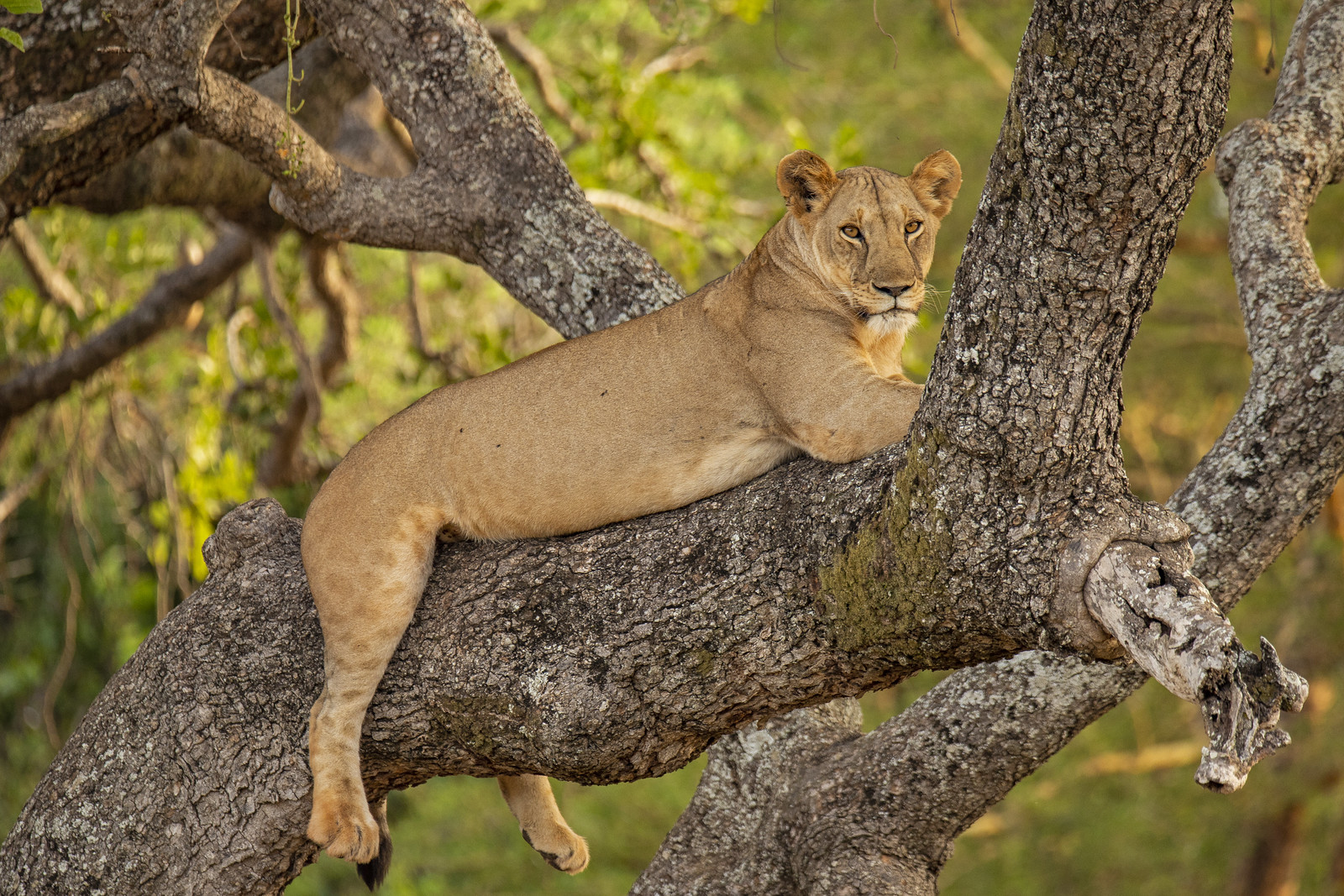
Lake Manyara National Park is small—just 650 square kilometres or 251 square miles—but it leaves a lasting impression. One of the park’s most peculiar sights is that of tree-climbing lions, alongside buffalo, hippos, cheetahs, and giraffes.
About 400 kinds of birds can be seen by seasoned birdwatchers, including pelicans and forest hornbills. Thousands of lesser flamingos can also be seen searching for food in the pink waters of the highly alkaline Lake Natron.
Ruaha National Park
Ruaha, the largest national park in Tanzania under state administration, is home to the Great Ruaha River, towering baobab trees, and one of the largest concentrations of elephants in any park in Africa.
There aren’t many lodges here, and there are relatively few visitors. It offers a genuine and realistic safari experience and is wilder than the Selous Game Reserve, its neighbouring reserve.
Walking safaris and night driving are often prohibited because of the abundance of elephants in this area. However, the wonderfully opulent Jongomero Camp, which is genuinely integrated into the natural surroundings, is tucked away on the Jongomero River in the isolated southern section of the park. Its guides are among the best in the camp, which may be one of the best in all of Tanzania.
Gombe Stream National Park

Gombe Stream National Park, made famous by Jane Goodall’s behavioural studies of the local chimpanzees, is located just shy of the shores of Lake Tanganyika.
Her investigations are believed to be the longest ever conducted on a single community of wild animals, spanning four decades. Along with chimpanzees, other wildlife found in the compact 22-square-kilometre (13.5-square-mile) grasslands, forests, and dense rainforest of Gombe includes red colobus monkeys, blue monkeys, olive baboons, and red-tailed monkeys.
Stone Town
Stone Town, also known as Zanzibar Town, was a bustling trading hub for firearms, textiles, minerals, and spices for more than a millennium, attracting traders from Europe, Persia, and China.
Numerous mosques and the Islamic attire of the residents attest to the influence of Islam on the island. Today, this heritage can be sensed in the atmospheric, narrow cobblestone alleyways lined with buildings designed in the Arab style.
Along with being a key hub for the slave trade, Stone Town was home to a sizable and notoriously violent market. The trade in enslaved people, both male and female, was arguably among the most active in the world prior to its closure in 1873.
Tanzania Safari Destinations: Kitulo National Park
This national park, known to the locals as Bustani ya Mungu, or “the Garden of God,” is a botanist’s paradise, teeming with vibrant orchids, lobelias, and lilies that flourish in the rich volcanic soil.
In addition to being a birdwatcher’s dream come true, this virtual Serengeti of flowers is home to numerous rare species that flutter and soar throughout the expansive, lush meadows.
From Mbeya, the plateau is reachable via 4×4. Hike along the breathtakingly beautiful undulating plains on one of the designated hiking trails, or take on a hill climb beneath the towering peaks of the Kipengere, Poroto, and Livingstone ranges. October to April, during the blossoming season, is the ideal time to visit.
Tanzania Safari Destinations: Lake Tanganyika
The biggest freshwater lake in Tanzania, Lake Tanganyika is also the second-deepest lake in the world. It serves as the foundation for a sizable local fishing sector that stretches across Tanzania, Zambia, Burundi, and the Democratic Republic of the Congo.
When travelling across its waters aboard a dhow, you can anticipate an incredibly surreal experience as the sun sets and gentle breezes whisk you along. You can go diving or visit the fish market at the lakeside village of Kigoma. We suggest staying at the Lake Tanganyika Hotel, which is located directly on the coast.
If you would like to be surrounded by the large lake, Lupita Island offers opulent accommodation along with activities such as swimming, snorkelling, kayaking, hiking, and fishing.
Tanzania Safari Destinations: Mafia Island
The reason so many tourists fail to visit Mafia Island, which is located north of Zanzibar, is likely because it is not formally recognised as part of the nation. Due to the low volume of tourists, those who do visit often refer to it as Tanzania’s best-kept secret.
With more fascinating waters, bluer skies, and pure white dunes than Zanzibar, it may even be more magical than Zanzibar. A whale shark, the largest fish in the world, can be seen moving through the waters off Utende, Juani, Kitoni, or Bweni Beaches. Hippos can also be seen lounging around Ndagoni Beach.
Tanzania Safari Destinations: Ngorongoro Conservation Area

The UNESCO-designated Ngorongoro Conservation Area is located right next to Serengeti National Park and is considered a true natural gem due to its significance and beauty.
Mammals are concentrated in this enormous crater, which was formed millions of years ago by a sequence of volcanic eruptions. The resulting ash contributed to the formation of the Serengeti plains.
During a single Land Rover ride over the crater, up to 30,000 animals of various species are frequently seen. Swamps are home to large tuskers, lions, hyenas, and Cape buffalo.
Tanzania Safari Destinations: Lushoto
Lushoto is a tiny town with a royal past that is surrounded by the breathtaking Usambara Mountains to the northeast. King Mbega established the Wasambaa people’s regal realm here in the past.
Here, their dynastic ancestors continue to linger, providing opportunities for community excursions, visits to royal villages, mountain treks, and trips to the cascading Kisasa Waterfalls.
Jiwe la Mungu, also called God’s Stone, is a few hours’ drive from Lushoto and provides breathtaking views of the verdant valleys that seem to curl into one another as though they are concealing secrets.
Although buses and aircraft pass through Tanga, where you can find a taxi or private transfer to continue the journey, there are no direct flights to the town.
